
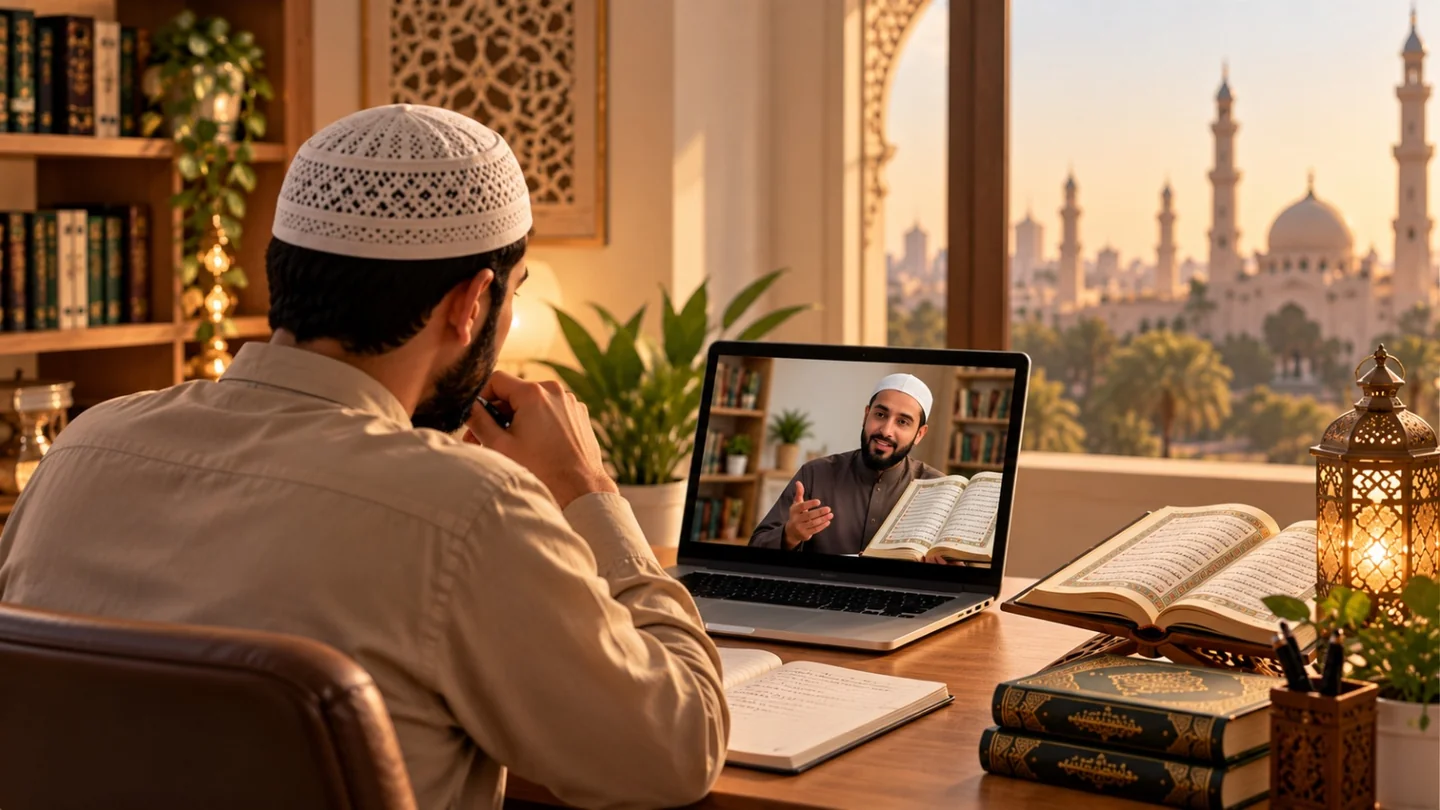
Learning the Quran is a rewarding journey that you can begin at any age. Whether you have never studied Arabic before, want to improve your recitation, or hope to memorize your favorite Surahs, it is never too late to start.
Many adults want to learn the Quran but struggle with busy schedules, unfamiliar Arabic letters, or uncertainty about where to begin. The good news is that learning the Quran as an adult becomes much more manageable with a clear study plan, consistent practice, and guidance from a qualified teacher.
In this guide, you will discover how to learn Quran as an adult, the best way to start as a beginner, common challenges, and practical tips to help you progress.
Can You Learn the Quran as an Adult?
Absolutely. Adults can learn to read, recite, and memorize the Quran regardless of their previous experience.
Some students begin by recognizing Arabic letters, while others already know how to read but need help applying Tajweed rules correctly.
Your starting level does not determine your potential. What matters most is choosing an appropriate learning method and practicing consistently.
The Prophet Muhammad (peace be upon him) said:
"The best among you are those who learn the Quran and teach it."
— Sahih al-Bukhari, 5027.
This Hadith highlights the importance of learning and teaching the Quran, making Quran education a valuable pursuit throughout life.
How to Learn Quran as an Adult: 7 Practical Steps
Step 1: Identify Your Quran Learning Goals
Before beginning, decide what you want to achieve.
Your goals might include:
Learning to recognize and pronounce Arabic letters.
Reading the Quran fluently.
Improving Quran recitation with Tajweed.
Memorizing short Surahs or longer portions.
Understanding basic Quranic vocabulary and meanings.
Having a clear goal helps you choose suitable lessons and track your progress.
If you are a complete beginner, start with Quran reading before moving on to advanced Tajweed or memorization.
Step 2: Start With the Arabic Alphabet
Learning the Arabic alphabet is an important first step for adults who cannot yet read Quranic Arabic.
Begin by studying:
The 28 Arabic letters.
The different shapes of letters within words.
Short vowels (Fathah, Kasrah, and Dammah).
Sukoon and Shaddah.
Tanween.
Basic pronunciation and letter connections.
Methods such as Noorani Qaida and Noor Al-Bayan can help beginners develop foundational reading skills.
Explore Ehsan Academy's Noorani Qaida online course to learn more about beginner Quran reading.
Step 3: Learn Correct Quran Pronunciation
Once you become familiar with Arabic letters, focus on pronouncing them correctly.
Some Arabic sounds may be unfamiliar to English speakers, including ع, ح, خ, غ, and ق.
These letters require practice because their articulation points differ from those commonly used in English.
A qualified Quran teacher can demonstrate the correct pronunciation and provide feedback.
Avoid relying entirely on English transliteration, because it cannot represent every Arabic sound accurately.
Step 4: Learn Basic Tajweed Rules
Tajweed refers to the principles that guide correct Quranic recitation.
As your reading improves, begin learning essential Tajweed topics, including:
Makharij Al-Huruf (articulation points).
Noon Sakinah and Tanween rules.
Meem Sakinah rules.
Madd (elongation).
Qalqalah.
Rules of stopping and starting.
You do not need to master every rule immediately. Learn gradually and practice applying each rule during recitation.
For structured instruction, explore Ehsan Academy's online Tajweed classes.
Step 5: Create a Realistic Quran Study Schedule
Consistency is one of the most important factors in Quran learning.
Adults often balance work, family responsibilities, and other commitments, so a manageable routine is better than an unrealistic schedule.
Here is an example of a daily Quran study plan:
Activity | Time |
|---|---|
Review previous lessons | 5 minutes |
Practice Quran reading | 10 minutes |
Study pronunciation or Tajweed | 10 minutes |
Listen to Quran recitation | 5 minutes |
Total | 30 minutes |
This is only an example. Adjust the schedule according to your ability and availability.
Even a shorter daily routine can be useful when followed consistently.
Step 6: Learn With a Qualified Quran Teacher
Although Quran learning apps, recordings, and videos can be helpful, receiving feedback from a teacher is particularly valuable for improving recitation.
A Quran teacher can:
Assess your current reading level.
Identify pronunciation mistakes.
Explain Tajweed rules.
Provide suitable exercises.
Monitor your progress.
Help you build a consistent learning routine.
When choosing a teacher, look for strong Quran knowledge, clear communication, patience, and an approach suited to adult learners.
You can explore the Quran teachers at Ehsan Academy to learn more about the academy's teaching team.
Step 7: Practice, Review, and Track Your Progress
Learning the Quran requires regular practice.
After each lesson, review the material before moving on to something new.
You can track progress by recording which letters, rules, or Surahs you have learned.
For example:
Week 1: Practice Arabic letters and their sounds.
Week 2: Learn short vowels and simple combinations.
Week 3: Practice reading basic Arabic words.
Week 4: Review previous lessons and assess your progress.
This is an illustrative plan, not a guaranteed timetable. Some students may need more time for each stage.
Focus on accuracy rather than speed.
What Is the Best Way to Learn Quran for Adults?
The best learning method depends on your current level, goals, and schedule.
Self-Study
Books, recorded recitations, and educational apps can support independent practice.
However, beginners may find it difficult to recognize their own pronunciation mistakes.
Group Quran Classes
Group classes provide a structured environment and opportunities to learn alongside other students.
However, the pace may not suit every learner.
One-on-One Online Quran Classes
Individual online lessons allow a teacher to focus on your specific learning needs.
They can be especially useful for adults who need flexible scheduling or personalized recitation correction.
If you want guided instruction, explore Ehsan Academy's online Quran classes for adults.
Common Challenges Adults Face When Learning the Quran
1. Difficulty Learning Arabic Pronunciation
Arabic contains sounds that may be unfamiliar to beginners.
Solution: Practice individual letters, listen to accurate recitation, and ask your teacher to correct your pronunciation.
2. Limited Time for Studying
Work and family responsibilities can make regular learning challenging.
Solution: Set aside a manageable amount of time each day and prioritize consistency.
3. Feeling Embarrassed About Starting Late
Some adults hesitate to begin because they think Quran lessons are mainly for children.
Solution: Remember that Quran learning is not limited to a particular age. Begin at your own level and focus on personal progress.
4. Forgetting Previously Learned Lessons
Without revision, students may struggle to retain reading skills, Tajweed rules, or memorized verses.
Solution: Include regular review in your weekly study schedule.
5. Trying to Learn Too Quickly
Rushing through lessons may lead to repeated mistakes.
Solution: Focus on understanding and applying each skill before progressing.
How Long Does It Take an Adult to Learn the Quran?
There is no fixed timeframe for learning the Quran.
Your progress depends on several factors:
Previous knowledge of Arabic.
Frequency of lessons.
Time spent practicing.
Learning goals.
Individual learning pace.
Quality of instruction and feedback.
Learning basic Quran reading is different from mastering advanced Tajweed or memorizing the entire Quran.
Set realistic milestones and evaluate your progress regularly.
Can Adults Memorize the Quran?
Yes. Adults can memorize the Quran, whether their goal is to learn a few short Surahs or work toward completing Hifz.
Successful memorization usually involves:
Reading and listening to the passage correctly.
Memorizing manageable sections.
Reciting the verses from memory.
Receiving corrections from a teacher.
Reviewing recent and older memorization regularly.
A consistent revision plan is essential for long-term retention.
Students interested in structured memorization can explore Ehsan Academy's Quran Hifz program for adults.
Tips to Stay Motivated While Learning the Quran
Maintaining motivation can be challenging, especially when progress feels slow.
Here are some practical suggestions:
Set small, achievable weekly goals.
Choose a regular time for Quran study.
Celebrate improvements in reading and pronunciation.
Avoid comparing your progress with others.
Ask your teacher for constructive feedback.
Review previously learned material.
Remember your purpose for learning the Quran.
Progress does not need to be fast to be meaningful.
Frequently Asked Questions
Is it too late to learn Quran at 30, 40, or 50?
No. You can begin learning the Quran at any age. A suitable learning plan, consistent practice, and patient instruction can help adults develop their skills.
Can I learn Quran without knowing Arabic?
Yes. Beginners can start with Arabic letters, pronunciation, and basic reading skills. Understanding Arabic is helpful but is not required before beginning Quran reading lessons.
Can I learn Quran online from home?
Yes. Online lessons allow adults to study Quran reading, Tajweed, and memorization remotely with guidance from a teacher.
How many minutes should I study Quran every day?
The ideal amount depends on your goals and schedule. Starting with 15 to 30 minutes of focused daily practice may be manageable for many beginners.
Should I learn Tajweed or Quran reading first?
Complete beginners should generally develop basic Arabic reading and pronunciation skills first. Tajweed principles can then be introduced gradually alongside Quran recitation.
Do I need a Quran teacher?
A teacher is highly beneficial, particularly for correcting pronunciation and applying Tajweed rules. Independent learning resources can support your lessons but may not provide the same personalized feedback.
Start Learning the Quran With Ehsan Academy
Learning the Quran as an adult does not have to be overwhelming.
By starting with the basics, following a realistic schedule, and practicing consistently, you can gradually improve your Quran reading, pronunciation, Tajweed, and memorization skills.
Whether you are a complete beginner or want to strengthen your existing knowledge, guided lessons can help you move forward with confidence.
At Ehsan Academy, you can explore online Quran learning opportunities and choose a suitable starting point for your goals.